
Burnet Release Dates Differ
TDCJ uses several date labels. A Projected Release Date is an estimate based on its current sentence and credit data. A Parole Eligibility Date opens a chance for review; it is not approval. A Maximum Sentence Date reflects the sentence endpoint calculation. When release work has advanced, a separate block may show Scheduled Release Date, Scheduled Release Type, and Scheduled Release Location. Scheduled information remains subject to change.
A pretrial person at Burnet County Jail has no computed TDCJ date. Bond may be posted, a judge may act, or a charge may be dismissed, yet another hold can keep the person confined. The sheriff also warns that bond releases involve many steps and no completion time is promised. For a county sentence, obtain the judgment and ask jail records how that sentence was computed.
Find Burnet Projected Release Dates
Begin with the last agency known to hold the person. Ellen Halbert Unit is in Burnet, but it is a TDCJ facility and its sentence data comes from the state. Burnet County Jail is a county custodian. Mixing the two produces false no-results and incorrect calculations.
- For a TDCJ prisoner, open the TDCJ Online Inmate Search.
- Search with a TDCJ number or SID number when possible. A name search requires the exact last name and at least a first initial.
- Match the name, identifiers, age, sex, race, facility, and offense history before relying on the detail.
- Read Projected Release Date separately from Parole Eligibility Date, Maximum Sentence Date, and any Scheduled Release block.
- For a Burnet jail sentence, obtain the court judgment and request the jail's actual sentence computation and release record.
- After the event, confirm the date with TDCJ, Parole Division, the sheriff, or the sentencing court.
The TDCJ inmate information page describes the current search and date fields.
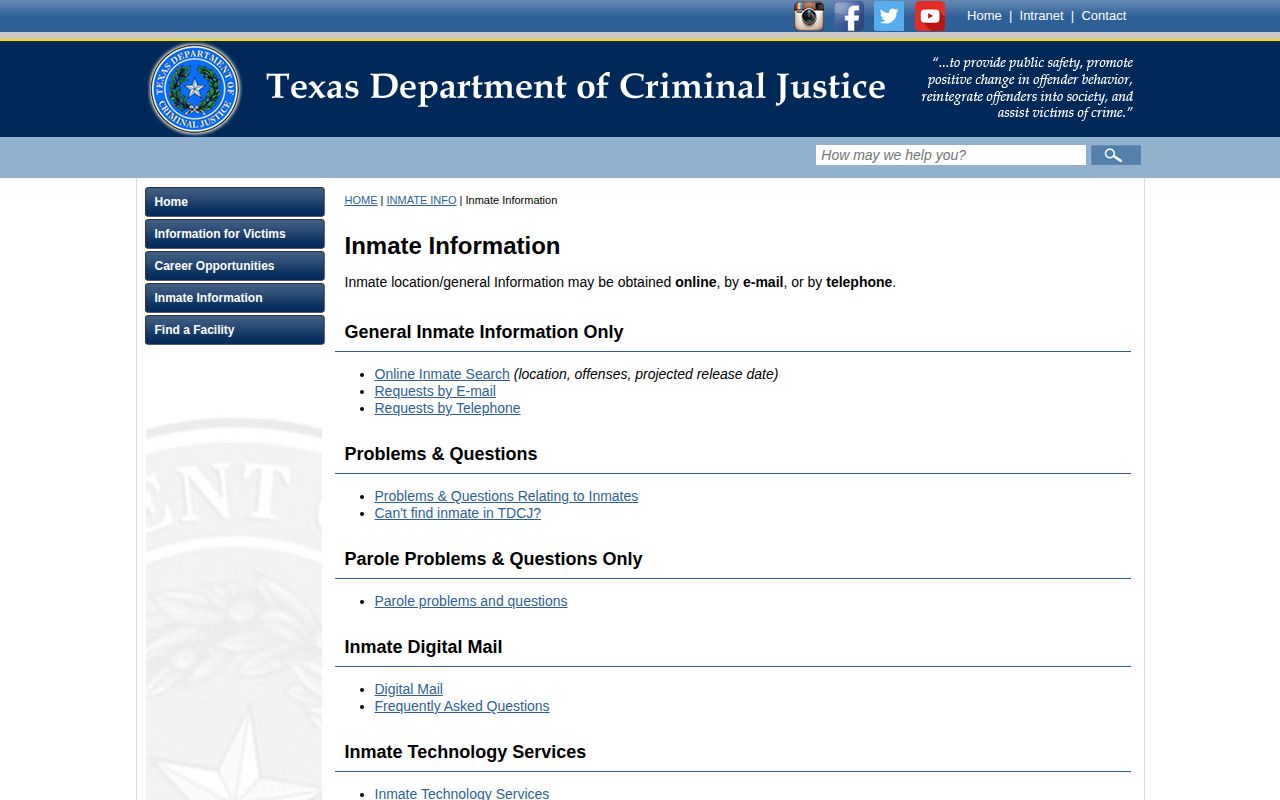
The official description also warns that the public search covers current TDCJ incarceration, not a permanent discharge archive.
Texas Release Credit Rules
Texas Government Code Chapter 498 governs good-conduct time. Section 498.003 applies credits to eligibility for parole or mandatory supervision under the relevant Chapter 508 rules. It also says those credits do not otherwise reduce the prison term. Classification and behavior affect credits, and Section 498.004 permits forfeiture. A simple subtraction from the sentence cannot produce a guaranteed Burnet County release date.
Government Code Chapter 508 contains category-specific parole and mandatory-supervision rules. Under Section 508.145(f), the general eligibility formula uses calendar time plus good time equal to one-fourth of the sentence or 15 years, whichever is less, subject to other provisions. Section 508.145(d) requires certain serious cases to serve calendar time equal to half the sentence or 30 years, whichever is less, with a minimum of two calendar years and no good-time credit toward that threshold.
Texas has no blanket rule that every TDCJ prisoner must serve about 85 percent. That shorthand should not be imported into a Burnet County release date lookup. The offense, sentence, offense date, statutory category, credit history, and parole or mandatory-supervision rules control. Sections 508.147 and 508.149 also make mandatory supervision conditional and exclude some categories.
- Good-conduct time
- A state credit affecting eligibility under governing law, not a direct cut to the sentence term.
- Parole eligibility
- The first point when discretionary review may occur, not a release promise.
- Mandatory supervision
- A statutory release form that may still be excluded or denied under current rules.
- Discharge
- The end of the sentence and its supervision, unlike parole release.
Why Burnet Release Dates Move
TDCJ Review and Release Processing checks residence plans, county-of-residence rules, discipline, special needs, release category, required programs, conditions, and other legal or case factors. Records staff then audit the calculation and prepare a release certificate. A favorable parole vote can precede physical release by weeks and may carry a future date or program requirement.
| Factor | Possible effect |
|---|---|
| Credit change | Earned, forfeited, or recalculated good time changes eligibility calculations. |
| Discipline or classification | A case or status change can affect credits and release preparation. |
| Court correction | An amended judgment, consecutive term, or sentence audit can change inputs. |
| Detainer or hold | Another agency may receive the person instead of a community release. |
| Parole decision | Denial, deferral, conditions, withdrawal, or a required program can move the date. |
| Release plan | Residence and special-condition review may delay a favorable decision's execution. |
The TDCJ Review and Release Processing page shows the operational stage behind scheduled dates.
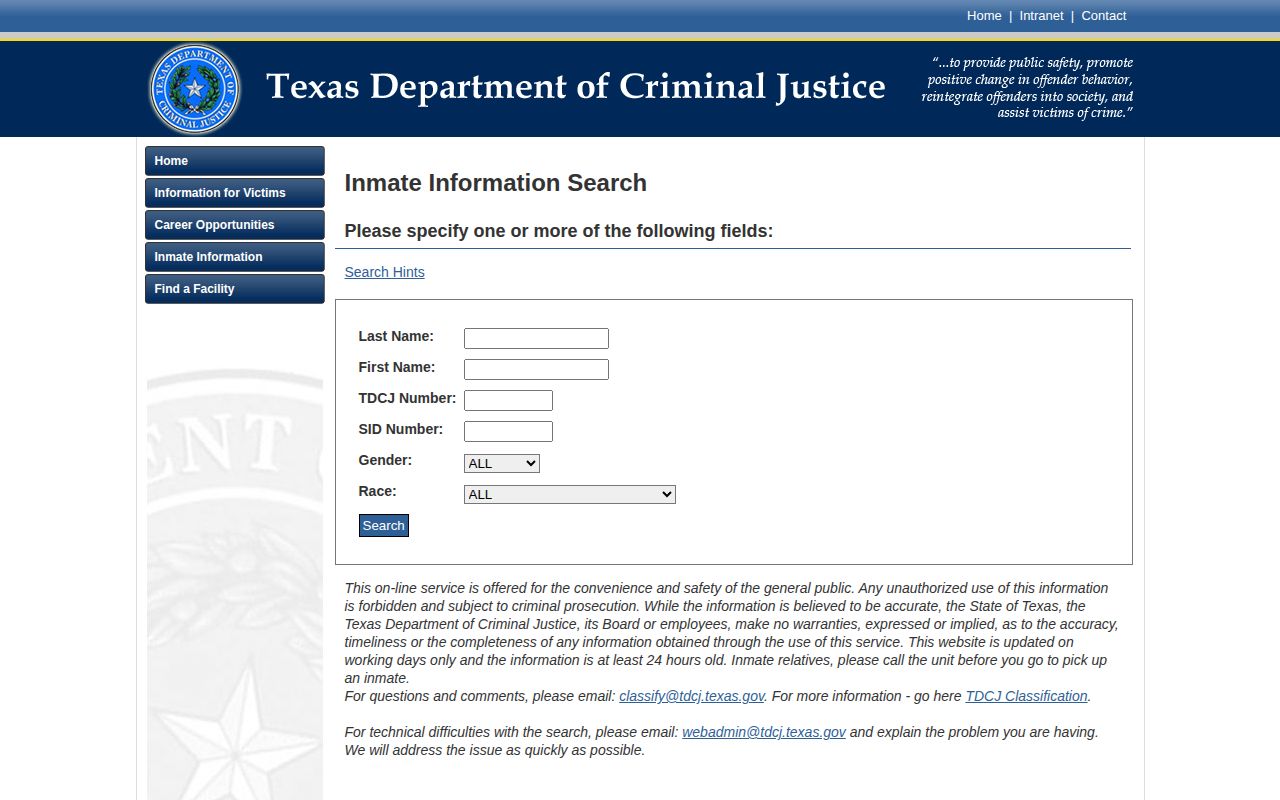
This screen is a source for current projections. It does not prove that release occurred on the displayed date.
Confirm Burnet Actual Release
TDCJ says its inmate data updates on working days and is at least 24 hours old. It also includes only people currently incarcerated in a TDCJ facility. Once someone leaves, the public result normally disappears rather than changing into a durable Released or Discharged record. Preserve the TDCJ or SID number, then use TDCJ records, IVSS notice history, Parole Division, Board status, and the sentencing court.
For Burnet County Jail, request the booking and release sheet from the Sheriff's Records Division. Ask for the actual date and time, type or reason, authority, outstanding hold, and transfer destination. The court docket can explain bond, dismissal, judgment, or sentence authority but may not show the minute jail staff completed processing. The Burnet County release record search explains the county records route.
Pending state release events can also be monitored through the VINE Inmate Check, which now uses Texas IVSS services. Treat the alert as a prompt to obtain the agency record. A transfer to ICE, the U.S. Marshals, BOP, another county, or another TDCJ unit is not the same as freedom from custody.
Burnet County Jail Computation
Research found no published Burnet County Jail good-time policy or calculation worksheet. TDCJ Chapter 498 credits therefore must not be applied to a county sentence without local authority. A pretrial detainee has no sentence computation at all. Release depends on bond, a personal-bond or other court order, disposition, and any active holds.
For a sentenced county term, obtain the judgment from the court of record and ask jail records for the calculation actually used. Include the booking number, admission date, sentence, time-served credit, and the date range in the request. If the jail says custody ended through transfer, follow the named agency and request its records too.
Note: A projected or scheduled date is prospective evidence; the originating custodian's departure record is the final confirmation of Burnet release.
Burnet TDCJ Search Fields
The TDCJ search accepts Last Name, First Name, TDCJ Number, SID Number, Gender, and Race. A unique number gives the best match. Last-name matching is exact, so punctuation, spacing, aliases, and changed surnames can matter. Current details may include age, facility, offense history, maximum sentence date, Projected Release Date, Parole Eligibility Date, and parole review information.
| Search field | Use |
|---|---|
| TDCJ Number | Unique state corrections identifier and preferred search key. |
| SID Number | Texas state identification number used to distinguish records. |
| Last and First Name | Use exact surname and at least a first initial when no number is known. |
| Gender and Race | Optional match refinements shown by the official search. |
Do not merge two people because their names look alike. Compare the identifier, age, facility, and offense history. Save the TDCJ or SID number before release because the current-only public locator will generally stop returning the record after state custody ends.
Burnet Parole Dates Need Context
The Texas Board of Pardons and Paroles does not conduct a formal public hearing for parole or mandatory-release consideration. Panel members review and vote files. An approval code is not always an immediate release order. FI-1 permits release when eligible, while other favorable codes may set a later date or require completion of a program. An approval can also be reconsidered when new information arrives.
For decision status, the official research identifies the BPP status line at 844-512-0461 and Parole Review Information in the current TDCJ detail. Burnet County parole supervision is assigned to the Georgetown District Parole Office. Those sources can explain supervision and vote status, but the actual release certificate or custody departure record remains the endpoint.
Decision codes also need their full wording. FI-1 can permit release when eligible, while another FI code can attach a future date or a treatment program. RMS concerns release to mandatory supervision. NR denies parole and sets a later review period. DMS denies mandatory supervision and schedules another review under the stated result. None of these abbreviations should be converted into an actual release date without the current Board explanation and the later custody record.
A projected date can also be overtaken by a new court order, consecutive sentence, warrant, or detainer. A detainer is a request by another authority to hold or transfer the person. It may cause TDCJ or the jail to relinquish custody to that authority on the expected date rather than release the person into the community. Ask “released to whom” whenever another agency appears in the record.